
Billing basics
CMS-1500 vs superbill — what's the difference?
Families sometimes ask for “the insurance form” and practices wonder if that means a CMS-1500. Usually it doesn't — here's the split.
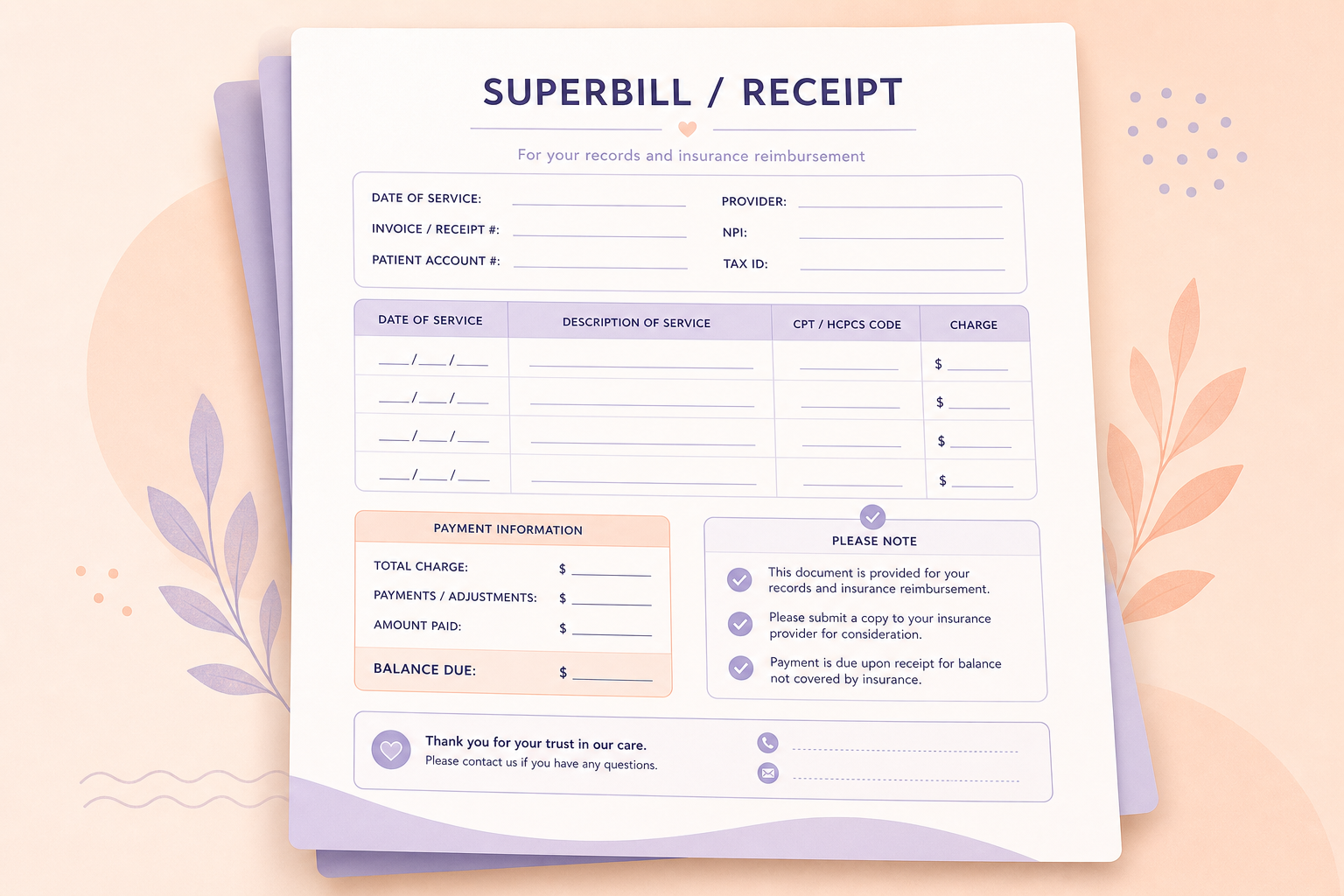
Two documents, two filers
- CMS-1500: the standardized professional claim form providers use to bill payers directly (in-network or courtesy billing). 33 numbered boxes, strict formatting, usually submitted electronically as an 837P.
- Superbill: an itemized service statement the member attaches to their own reimbursement claim. Same core data (NPI, TIN, CPT, ICD-10, POS, fees) without the claim-form rigidity.
Which one your families need
For member-submitted OON claims, a complete superbill plus the payer's member reimbursement form is standard. A handful of plans ask members for a CMS-1500 anyway; if that happens, you can provide one or point the family back to the payer's own form — the superbill contains every data element a CMS-1500 needs.
If you start courtesy billing
Then you're in CMS-1500/837P territory: payer IDs, clearinghouses, and timely filing become your problem. See our courtesy billing guide for whether that trade is worth it for your practice.
FAQ
Can a superbill be rejected because it isn't a CMS-1500?
Member reimbursement processes are built around itemized statements, so no — but the payer's own member form is often required alongside it. Check the plan's claim instructions.
Where do I get blank CMS-1500 forms?
Official red-ink forms come from authorized printers (scannable versions matter for paper claims). If you're only doing superbills, you don't need them at all.
More practice guides
Educational content only — not billing, legal, or tax advice. Verify payer policies and regulations for your state and situation.