
Billing basics
Courtesy billing vs superbills: which should your practice offer?
Private-pay practices choose between handing families a superbill (they file) or courtesy billing (you file, they receive reimbursement). The right answer depends on your admin capacity and your market.
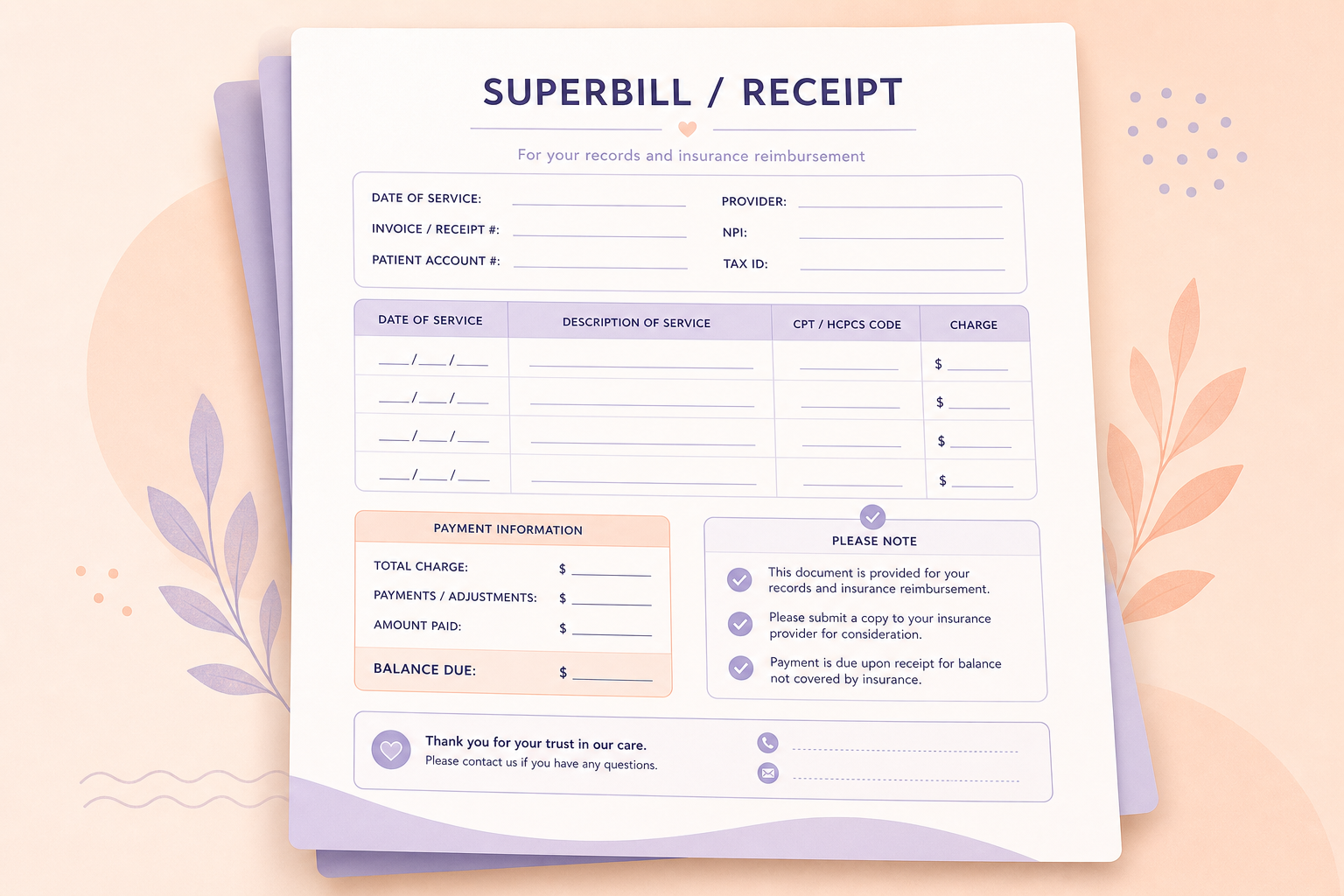
The two models
- Superbill model: you provide an itemized superbill monthly; the family submits to their plan and receives any reimbursement. Zero claim labor for you.
- Courtesy billing: you submit the OON claim on the family's behalf (payment still comes to them, or to you with assignment). More service, more admin.
Trade-offs
- Superbills cost you ~3 minutes per family per month with a generator; courtesy billing costs 15–30 minutes per claim plus denial follow-up
- Courtesy billing wins referrals in competitive markets — it's a genuine differentiator families talk about
- Courtesy billing pulls you into payer portals, timely filing rules, and appeals — the administrative weight you went private-pay to avoid
- Hybrid: superbills by default, courtesy billing as a paid add-on or for long-term families
A script that sets expectations
We are an out-of-network practice. You pay at the time of service, and each month we provide a detailed superbill with every code your insurance needs.
Many families receive 50–80% back after their out-of-network deductible, depending on their plan.
We recommend calling the number on your insurance card to ask about your out-of-network benefits — we're happy to give you a script with the right questions.
FAQ
Can we charge a fee for courtesy billing?
Many practices bundle it into rates or charge a small monthly admin fee. Disclose it in your financial policy; avoid tying the fee to reimbursement outcomes.
Does courtesy billing create HIPAA obligations?
You already have them as a covered provider. Filing claims adds payer data exchanges, so use compliant tools rather than personal email for claim documents.
More practice guides
Educational content only — not billing, legal, or tax advice. Verify payer policies and regulations for your state and situation.