
Billing basics
HSA & FSA payments for pediatric therapy — what practices should know
Therapy for a diagnosed condition is an eligible medical expense — which means HSA/FSA dollars can pay for it. Practices that handle this smoothly remove a real friction point for private-pay families.
Eligibility basics
Speech, occupational, physical, and behavioral therapy to treat a diagnosed condition qualify as medical care under IRS rules. Services that are purely educational or enrichment do not. The diagnosis on your superbill is what substantiates eligibility.
Accepting the cards
- HSA/FSA debit cards run as normal card payments; healthcare-coded merchants (your Stripe/processor category) usually approve without extra steps
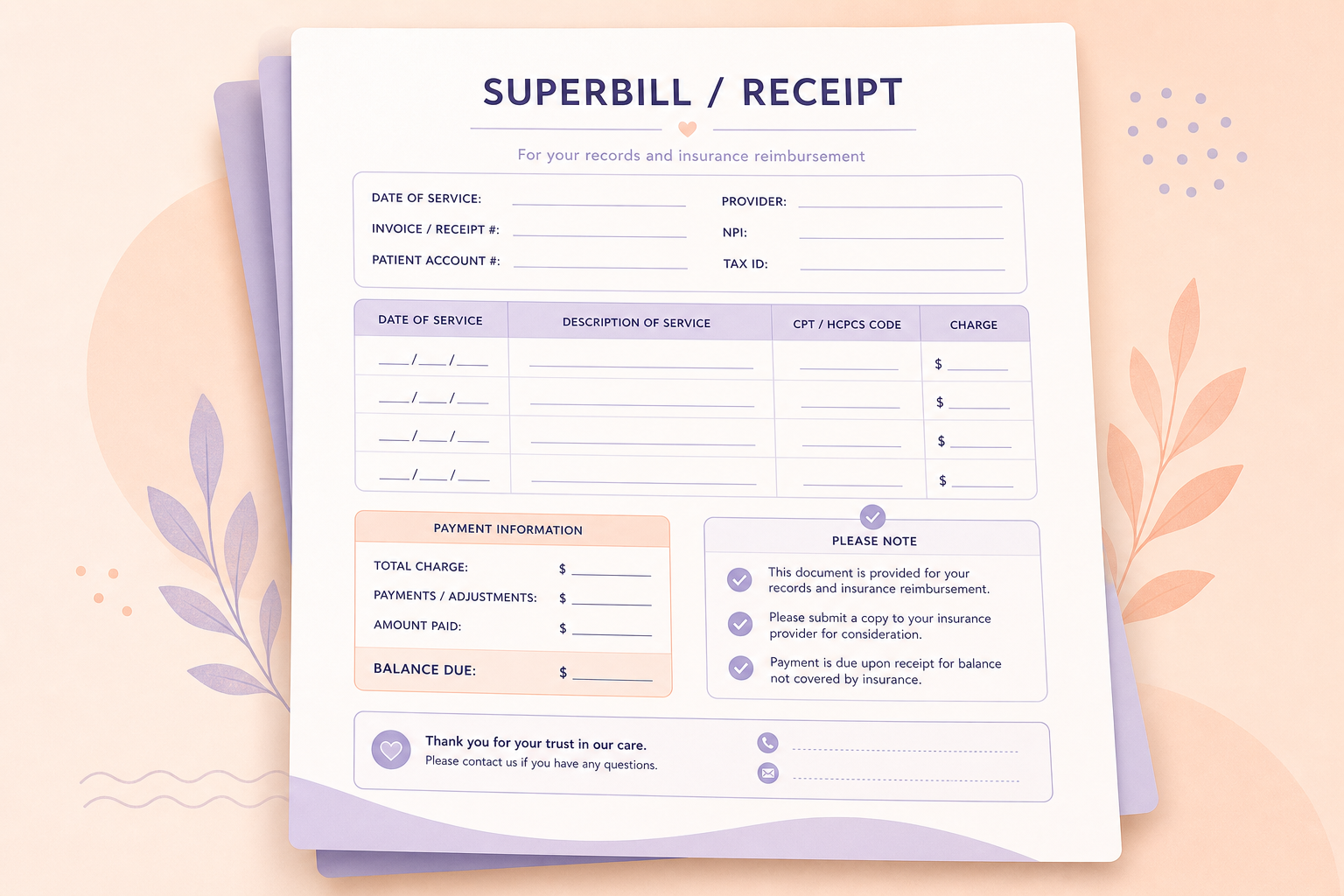
- When a card is declined or the administrator asks for substantiation, the family needs an itemized receipt — a superbill satisfies it
- Letters of medical necessity from the referring physician help for ABA and long-duration plans of care
What families need from you
- An itemized superbill or receipt: provider, date, service (CPT), diagnosis, and amount
- Consistency — administrators compare receipts across months; keep the same format
- Year-end totals for tax records (a saved superbill history makes this trivial)
FAQ
Can families use HSA funds and also submit for OON reimbursement?
They cannot double-dip on the same dollars: expenses reimbursed by insurance are no longer HSA-eligible. Families typically submit to insurance first, then use HSA funds for the unreimbursed remainder.
Is a superbill enough for FSA substantiation?
Yes in most cases — it contains everything administrators ask for: date, provider, service, and amount. Some administrators also want the diagnosis, which superbills include.
More practice guides
Educational content only — not billing, legal, or tax advice. Verify payer policies and regulations for your state and situation.